Sparrow

Let’s pretend we’ve just gorged ourselves on Korean food and are drowsily sitting in the basement, sprawled on the couch with distended bellies full of rice and garlicky banchan. Imagine that you’re listening to my dad telling you more Stories from Easter Island. Maybe it’s because there is always so much to eat nowadays, and there was so little back then that the stories are so often about food. Here’s the first one…

DadI always had a dog when I was growing up in Korea, but I don’t like having a dog here. I feel sorry for dogs in America. In Korea, no one kept dogs in the house or on a leash. The dogs would be fed in the morning and then they’d join the rest of the village dogs. They would roam free in the fields all day long…huge packs of them. There would be fifteen to twenty dogs running around together all day long, having so much fun. In the evening, they would go back to their own houses and eat whatever scraps they were given.

All the dogs were mutts, but one of our dogs happened to grow up to look almost exactly like a purebred German Shepherd. He was such a smart dog. He was really good at catching mice and birds. He’d settle himself down in a patch of sunlight and pretend to be asleep. When a sparrow would wander past, he’d suddenly attack and catch it! Just like that!

Roasted sparrow tastes really good. You only eat the breast. They’re so small that they’re just one mouthful. Nobody ate meat in those days. We only had it for special occasions…maybe a little in dduk gook once a year on New Year’s. My brothers and I always wished we could eat the birds our dog caught, but we never got a chance to. Our mother would always take them to give to other kids in our village who had colds, because roasted sparrow is supposed to be a cure for the common cold.

Next time: More Stories from Easter Island.

Stories from Easter Island

My father occupies any space he is in with a stoic, silent, and monumental presence. His impassive demeanor has prompted us to call him (behind his back, but with the greatest of affection!): The Easter Island Head.

When he was an active minister, my father would break his silence once a week on Sundays to preside over a Korean congregation in Northern Virginia. For one hour a week, between the hours of eleven and twelve, he would undergo a remarkable transformation. I couldn’t understand the sermons he would preach, but I could practically surf along the dramatic swells and crests that would come billowing into the pews from the pulpit. His animated face would glow and he would gesticulate to emphasize a point. Every once in a while, the congregants would burst into appreciative laughter and I would wonder what he could have possibly said that was so funny. During the hymns, he would forget to step away from the microphone, so his strong, fine voice could always be heard over everyone else’s. At the stroke of noon, the spell would be broken. He would fall silent and the impassive façade would settle back over his features like a mask, and would remain there until the next sermon he gave, or the next class he taught.

Only one other circumstance would cause the stony exterior to fall away to reveal the gentle river of memories and deep emotions that, in truth, have always floated fairly close to the surface. Within the close circle of his own immediate family, my father would often talk about his difficult childhood. Unlike my mother, who buries the unhappy memories of her past in some secret, inaccessible vault to which only she has the key, my father seems compelled to share his personal history through the stories he repeats over and over in an almost ritualistic way. Though I’ve heard them countless times, I never get tired of listening. When my father tells us about his childhood, and about the deaths of his father and siblings in his quiet, measured tones, it feels as if we are partaking in a sacred rite of remembrance to honor family members we would never know.

My father’s family lived in the country. They lived through the Japanese occupation, World War II, and the Korean War. Life was a struggle. Disease was rampant. When he was eleven years old, his entire family was struck down by typhoid fever for two weeks.  Only his mother did not get sick, because she had already survived her own bout of typhoid fever as a child. By the end of those terrible two weeks, my father’s father was dead. He left behind a widow with ten young children and a farm to run. This disastrous change in the family’s fortunes unleashed a whole chain of calamities.

To save grain, the family would skip lunch and only eat twice a day. My father watched three sisters and two brothers, between infancy and second grade, succumb to malnutrition and disease. Of all the siblings he lost, the one he talks about most is a beloved younger brother, who died at the age of four.

Whenever he speaks of this brother, he prefaces everything by saying that he was a genius. He always mentions his enormous head.

“Other than his big head, how could you tell he was a genius, Dad?” I asked, when he spoke of him most recently.

“I would carry him on my back and teach him Bible verses. I would recite a long passage such as Psalm 23rd just once, and he’d be able to repeat it back verbatim.”

He continued, “We had gotten used to the sound of WWII B-29 bombers. But when the communists overtook our village, American sabre jets flew over for the first time. We had never heard them before, and the noise…it was like a terrifying thundering metallic sound raining down from heaven.”

My father’s little brother was already weak and ill, but he thinks it was the noise of the sabre jets that literally scared him to death. When they would pass over, he would tremble with fear. Every time he would start to recover from the shock, another jet would fly over and he would get sick again.

There wasn’t enough to eat, and no one could risk going outside to forage for food for fear of falling bombs. “He would have survived if we had paid more attention,” my dad concludes. After a long pause, he says, “I really wished I could have caught bullfrogs to feed him.”

In the past my mother would try to comfort him when he finally arrived at this sad conclusion. She would say, “You were just a child. There was nothing you could do. It was too dangerous to go outside.” Nowadays, we all remain silent.

This last time, there was a coda to the story. My father told me that he was flying into LA for a conference when they announced over the intercom that the U.S. had just invaded Iraq.

“I was shocked when people started cheering. These people had never lived through a war. I immediately thought of the women and children, who would be terrified. When we landed and were arriving at the airport, everyone looked excited and happy…”

He shook his head in dismay and grew silent.

“I couldn’t believe what I was seeing. I thought to myself that if they had ever lived through bombings, they would never be cheering for such a thing.”

Though he only lived four short years on this earth, my father’s little brother lives on through the words of his loving brother, and the burnished memories he has passed on to his own children.

Psalm 23

The Lord is my shepherd; I shall not want.
He maketh me to lie down in green pastures: he leadeth me beside the still waters.
He restoreth my soul: he leadeth me in the paths of righteousness for his name’s sake.
Yea, though I walk through the valley of the shadow of death, I will fear no evil: for thou art with me; thy rod and thy staff they comfort me.
Thou preparest a table before me in the presence of mine enemies: thou anointest my head with oil; my cup runneth over.
Surely goodness and mercy shall follow me all the days of my life: and I will dwell in the house of the Lord forever.

Related post: Little brown haired girl


Seoul Roundup

On our last marathon day in Seoul, my sister and I checked out another place that was right next door to our hotel in Gangnam. At the Seoul Center for Important Intangible Cultural Assets, we took silly pictures (see above)!, wandered through galleries, and checked out studios where master craftsmen produce things like norigae (decorative tassels) and calligraphy.

And then it was on to another part of the city to visit the university my grandfather founded. We saw this fantastic cart en route:

and stopped for lunch. It wasn’t exactly what we were expecting!

The last time I was in this part of the city about five years ago, this stream area was still under construction:

After a lot of aimless wandering, we finally found our way to the university, where my grandfather, an uncle, and our own father were presidents, and where another uncle is currently the president:

We finally ended our last day in the Bukchon Hanok Village. This is a residential area in the center of Seoul, between the palaces of the Joseon Dynasty – Gyeongbokgung and Changdeokgung. These traditional houses (“hanok”) were the residences of high-ranking government officials and aristocrats. They have been carefully preserved and are still used as private homes. Some have been converted into shops and restaurants.

There were so many other places I wanted to go, but didn’t have the time. It will have to wait until my next visit to Korea!

Busy days and nights in Seoul…

The next few days were busy from the crack of dawn to late nights with a reception, meetings at Seoul National University, and a conference…

In the evenings after work my sister and I roamed around the city together…

Once the conference was over, my sister and I had one more day to explore the city. It was a marathon!

Our hotel overlooked a group of Royal Tombs of the Joseon Dynasty. There are 40 different Joseon Dynasty Royal Tombs scattered around various locations in Korea. Collectively, they have been designated a UNESCO World Heritage site. Seonjeong-neung Park in Gangnam contains the tombs of King Seongjong (1469-94) and his wife Queen Jeonghyeon, as well as the tomb of King Jungjong (1506-44). On Friday morning we began our day by taking a walk around the park. The first stop was the jaesil, or “house of purification.” This was where officials would stay to purify themselves before presiding over the funeral rites.

Being here reminded my sister of visiting my paternal grandmother when we first moved back to Korea many years ago when she was six and I was a baby. Our grandmother lived in a house like this in the country. My sister remembers waking up in the middle of the night to see my mother compulsively glueing down edges of the waxed paper floor covering that had curled up:

IMG_7959

Traditional Korean houses were heated by underfloor heating called ondol. Smoke from a furnace would travel through channels covered by the paper. The paper would be the only thing protecting everyone from the real peril of carbon monoxide poisoning.

This T-shaped shrine is typical of Joseon Dynasty burial sites:

A closeup view of some of the gargoyles perched along roof edges:

The tombs themselves are located in three different sections of the park. To reach them, you wind past copses of undulating pines:

More tomorrow…

Tapgol Park

One of the things I like most about Seoul are the many parks scattered around the city. The elderly often congregate and exercise in these parks. Many parks and walking paths in Korea are equipped with a whole circuit of exercise equipment that’s available for anyone to use. Some just have enormous hula hoops and a wide-open space. It’s quite a sight to see little white-haired old ladies hula hooping with those oversized hoops! You often see elderly retirees lounging in the colorful shelters, socializing with each other.

My sister and I spent a few moments resting and wandering around Tapgol Park, a serene oasis located in the center of bustling Seoul:

The park’s main structure as well as some of the smaller satellite shelters are painted in the traditional Korean dancheong style, that is: wood decorated with patterns and symbols primarily in cinnabar and blue-green. You find dancheong on temples and palaces throughout the city. Handpainted by trained dancheong artists, the traditional style buildings provide a striking contrast in an otherwise modern urban landscape.

Korea, Pt. 1

A couple weeks ago I went to Korea for work. I badgered my sister into going with me, so I got to play a little too!

Things were still hopping when we arrived at our hotel in the Gangnam district in Seoul very late on Saturday night. The first thing I noticed was that there were foreigners everywhere and that I could hear a lot of people speaking English. They all seemed to be coming from a side street right next to our hotel. When we investigated the next morning we found this rather dramatic entrance to a nightclub:

The last time I was in Korea was about five years ago. At that time, it was still extremely rare to hear English being spoken or to see any foreigners. People would openly gape at my husband wherever we went, as if he were a space alien. The only English we ever heard was when children would run over to ours when we’d be hanging around playgrounds to practice saying “hello.” That was, in fact, usually the only word they could manage. Things have changed a lot in a very short amount of time.

Another thing I noticed this time was an overabundance of coffee shops:

and makeup stores. I spotted this at one of them:

The minute you walk into one of these stores the saleswomen start plying you with free samples. Korean makeup is at the cutting edge, so those millions of little packets they press upon you are like pure gold!

On Sunday my sister and I wandered around Insa-dong, a neighborhood filled with antique shops, art, and handcraft markets. Weekends are a good time to go, because the main drag is closed off to vehicles and becomes a pedestrian thoroughfare. When you get off at the Anguk subway station, you have to go through a twisty rabbit’s warren of restaurants and inns before you finally reach the main shopping area.

Of course, I had to stop and take photos along the way.

We noticed that Insa-dong has become much more tourist-oriented in the last few years. It’s become a sort of Korean tchotcke strip. Apart from the many smaller shops and teahouses, there are a few larger souvenir stores dotted along the main street as well. There’s also a mall called Ssamziegil, which is fun to explore. It’s designed like the Guggenheim spiral, so you can go up to the top and hit every single store as you make your way down. Very satisfying!

For lunch we had tteokbokki, traditional Korean street food. There are pojangmacha, or street vendor tents all over the city. Many of them are open into the wee hours of the morning, so you can get your fix any time of the day or night. We took a seat on little plastic stools at a plastic table in a rudimentary tent. Armed only with a long toothpick, we ate tteokbokki, a dish made of cylindrical, super chewy rice cakes swimming in gochujang: a spicy, slightly sweet, fermented chili sauce. So delicious! Notice the plate is covered in a plastic bag for easy clean up.

For dessert we got bobki:

My sister remembers getting one of these every day after school when we lived in Korea. It’s a sort of candy made of sugar and a little bit of baking soda. The vendor melts the two ingredients together and then pours it out onto a flat surface and stamps a design into it. My sister remembers that if you could break off the edges cleanly to leave only the star shape inside, you would get another one free.

To this day, my brother bears a scar on his arm from our secret attempts to make this ourselves when we were living in Pennsylvania. You can try this at home too! (Making the candy, that is. Not burning your little brother)! Put some sugar into a metal ladle and melt it over a burner, stirring all the while. Once the sugar melts into a clear liquid, add a pinch of baking soda. It will become a caramel color and the mixture will get slightly foamy. At this point, you pour the mixture out onto a plate or other flat surface. Press it with another flat surface to get a thin flat disk. That’s it! Easy and yummy!

More tomorrow…

Little brown haired girl

I have brown hair. This would not be noteworthy, but for the fact that I am Korean and Koreans always have jet black hair. When I was little, my dad would tell me that my hair reminded me of his little sister, who also had brown hair. In those days in Korea, brown hair was so freakish and unnatural as to be considered bad luck. My superstitious grandmother kept shaving her daughter’s head in the hope that the hair would grow back black, but of course it never did. I always felt connected to my dad’s little sister and felt sorry for her, but all I ever knew about her was that she had brown hair like mine and that she died young.

Today as I was sitting with my parents on the last day of our Thanksgiving break, the sun was streaming through the window. My dad stared at my hair lit by the sun and started talking about his little sister again. He told me again about how his mother would shave the little girl’s head. The poor girl hated this, but her mother insisted on doing it over and over again.

“It looked terrible, and she would have to go to school looking like that,” my dad said with pity.

For the first time, I began to ask questions about her.

“What was her name, Dad?”

He hesitated and I held my breath. I was afraid that it had been so long ago that he might have even forgotten her name.

“Her name was Yunja, but the Japanese gave her the name ‘Toshiko.’ My brothers and I thought that was such a fancy sounding name, we decided we would all call her that. She was rather tall for her age and good looking. She would have grown up to be a beautiful woman.”

“How old was she when she died?”

“She was in second grade.”

“How did she die?”

“Sunstroke. During the Japanese invasion, they made us all work outside for hours in the sun. The boys wouldn’t wear shirts and we would get so badly sunburned that all of our skin would bubble and peel off at least twice a year. My little sister was healthy and strong. She should have survived. I don’t know why she didn’t.”

“She died at school?”

“She got sick at school, but they brought her home and she died there. I was already working in the watch factory in Seoul, so I never even got to see her. I just heard about it through a letter.”

There is not a single photograph of the little girl whose name I have only just learned. And though her life was fleeting, she is remembered over seventy years after her death with abiding love.

Enhanced by Zemanta

My Mama, the Drama Queen

My mother is a force of nature…

I’ve re-posted this one once already, but I can’t resist posting it one more time.

My dad told us that he heard about my mother before ever setting eyes on her. According to him, Seoul was abuzz with excitement about her acting. This horrified and mortified my grandmother, who considered acting a déclassé pursuit not too far removed from prostitution.

Although my mother gave up stage acting after college, she has worn the tiara of an inveterate drama queen all her life. She is brash and sparkling: like a firecracker rather than a candle. It was a cosmic accident that my mother was born in Korea, and not in America. Korean women titter hesitantly with their heads bowed and a hand covering their mouth; my mother throws her head back and guffaws raucously. When she’s happy, she trills like a bird. When she’s angry, her eyes blaze, the moon eclipses the sun, and darkness falls heavily upon the cold earth.

Her exceptional acting skills have been called into service many times over the years. A Korean couple once called my parents in the middle of the night to ask them to accompany them to the emergency room so that they could help interpret for them. They waited in the emergency room for hours while the woman’s condition worsened. She was doubled over in agonizing pain, but was still made to wait. Suddenly, my mother stood up and started screeching at the top of her lungs like a madwoman, “This woman is DYING! She’s DYING and NO ONE IS TAKING CARE OF HER! SHE’S GOING TO DIE, RIGHT HERE IN THE WAITING ROOM!” Later my mother reported burning with shame and embarrassment as she created the scene, but she didn’t stop screaming until the orderlies rushed over and wheeled the woman away. When the doctors came back, they reported that the woman had had an ectopic pregnancy, and had indeed been minutes away from dying when my mother gave the spectacular performance that saved her life.

My mother continued to hone her craft over many years and in many venues. Bank performances became her specialty. In fact, torturing bank employees across America and getting them to do her bidding became something of a hobby for my mother. As she can’t drive, she would have me take her to the bank. My mother would sit silently, clutching her big shabby purse on her lap until called, whereupon she would blink her eyes like a dazed little bird and wander into the cubicle of her next victim. The affable bank employee would size up this little old lady, crack a few genial jokes, make a few pleasantries…And then my mother would begin.

“Now. I received this letter from you telling me that my CD matured. I would like to withdraw my money, please.”

“Ah, yes, Mrs. Kim, but it’s now July 15th, and the deadline for withdrawing was more than two months ago.”

“Yes. I understand. But I was in Korea, and I couldn’t come until today.”

No matter what the banker said, no matter how patiently he would point to the date long passed, my mother would just keep repeating her request over and over in the same mild-mannered way.

“I couldn’t come by May 1st, because I was in Korea. My flight arrived only a few days ago. I was sooo jetlagged, but finally I was able to come today. And I would like my money now.”

It would go on like this for a good ten minutes. “Pooooooor sap,” I’d think to myself as I would watch the banker squirm like  a pinned insect. Finally, he would succumb to the inevitable and hand my mother whatever she wanted on a silver platter. I imagine those bankers consoled themselves with the thought that they were doing a good deed for this dear, confused little kitten. If they had paid attention, though, they would have witnessed a remarkable metamorphosis as she strode out the door counting her bills like a Korean Keyser Söze.

Her own family was treated to the theatrics as well. When she thought we were watching too much T.V., for example, she heaved the  set into the driveway, pulled the plug out from both ends, and chopped the cord into a million pieces. When I was struggling to finish my Ph.D. with a toddler and an infant to care for and was ready to give up on the whole project, my mother called me one day and pleaded in a voice overwrought with emotion, “Just finish it for your father’s sake. It would mean so much to him. Please. Do this one last thing for him, before he dies.” Never mind that he was in perfect health, the dissertation got written that year.

About four years ago, we almost lost my mother. She was diagnosed with primary amyloidosis and given eighteen months to live. She came back to America to be treated at Sloan-Kettering through a clinical trial of a chemotherapy drug. When it was clear that the treatment would kill her faster than the disease, she was kicked out of the trial, but she had had just enough chemo to knock her disease into remission. Fiercely independent, though still weak as a newborn lamb, she insisted on dragging herself back to Korea on a 20 hour flight, against doctors’ orders and despite the entreaties of her family. My dad shudders when he recalls her lying on the airport floor from sheer exhaustion during a layover. She broke three ribs the day after arriving when she tripped over the suitcases she was too tired for the first time in her life to unpack the minute she arrived, but she had triumphed. Giving Death the finger, she had staggered back to her own apartment, and her own life. We went to visit my parents that summer and met my father’s assistant minister. This grown man in his thirties, married with two children, confessed to my brother in his heavily accented English, “I am scared of your mommy. But I love her.”

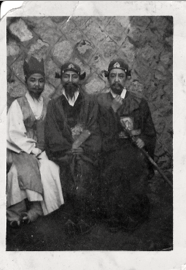
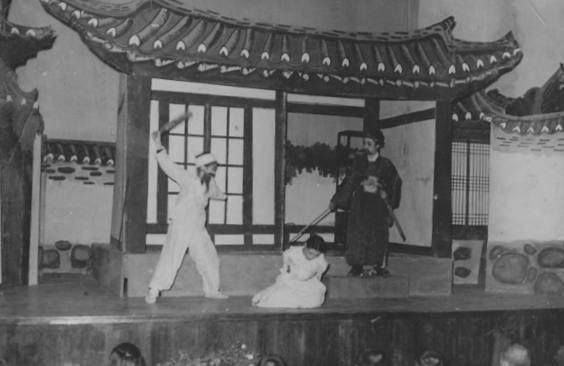
Honestly, I could write a whole novel about this woman, but I’m too scared she might read it and I’d be in big fat trouble. Instead, I’ll leave you with some photos of my mama, the Drama Queen from her early acting days.

There she is……….on the left!

In these next two photos, she’s the badass on the right.

Enhanced by Zemanta

Take me back to San Francisco

First published last September…

I’m on a plane heading to San Francisco for my cousin’s wedding. Actually, while I will be going to the wedding, I’m really going for my parents, who are using this happy pretext to revisit the place where they began their own life together as a married couple.

In February 1963, my father was a student in San Francisco. Against all odds, he had managed to make his way to the U.S. to pursue the education that had cruelly eluded him during a childhood filled with adversity and suffering.

School was a luxury, a beautiful dream that was constantly interrupted, snatched away, and cut short by real nightmares:  air raids, forced labor by the Japanese occupiers, disease…The sudden and premature death of his father was disastrous for his family, already reeling under the privations brought about by the occupation. My father witnessed beloved siblings die from malnutrition – the very thought brings me to my knees. The family was able to scrape together enough money to pay for only one son’s school fees. The others had to help on the farm so that the family could survive.

When my father’s older brother saw how desperate he was to get an education, and though he would sorely miss his help on the farm, he gave him his blessing to leave home at the age of 13 in pursuit of his dream. My father would have to find a way to support himself through school. He still remembers his brother’s sacrifice with deep gratitude.

He walked for days to get to Seoul, where he found a job sweeping glass in a watch factory. He worked during the day, went to night school, and at the end of every long day, he would sweep clean a place on the factory floor where he would sleep. Eventually, he enrolled in a new college that had the lowest tuition he could find.

The school’s president was the scion of a family of Catholic martyrs: three generations of his family were wiped out on one day. His own father had physically survived the massacre, but was a ruined, broken man. The president had gone on to become the leader of a Christian underground resistance movement. He was repeatedly arrested and tortured by the Japanese for his activities and was always on the run. Fearing for her own safety, his wife would dress as a beggar and hide in the busy marketplace all day, returning home to their children only late at night. Eventually, he led a large group of hundreds of refugees to Manchuria, an arduous journey on foot during which his youngest child, an infant, died. When he was finally able to return to Korea, he founded the college.

My father became the president’s star student. He had a fierce hunger and passion for knowledge. He gorged himself on philosophy, history, languages. Emboldened by a degree finally under his belt, and encouraged by American G.I.s he met while doing his compulsory military service, he took and passed a test, which would allow him to continue his studies in the U.S.

Before he was about to graduate, my father went to the president’s office to tell him that he was getting married. The president congratulated him heartily, and it was only then that my dad revealed that he was going to marry his own daughter, my mother. The college was (and is) an institution where skirt hemlines are strictly monitored and relationships between the sexes are discouraged. How my dad worked up the nerve to court and get engaged to the president’s daughter behind his back is unfathomable to me. His placid, gentle demeanor belies steely, ballsy determination that has carried him throughout his life.

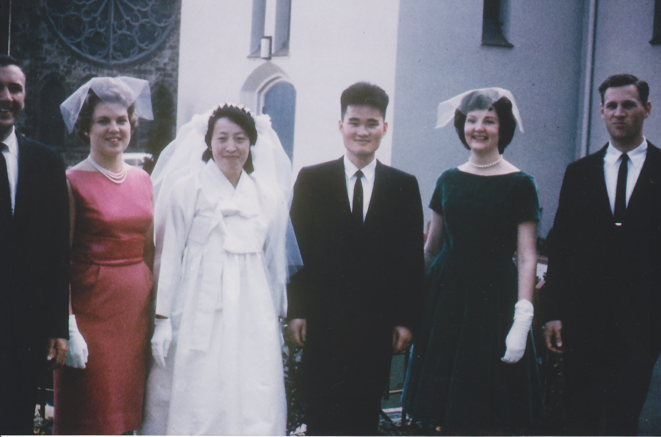
So in February 1963, my mother stepped off the plane in San Francisco to meet her soon-to-be husband. Their separation had been long. Her arrival had been delayed by a year when an x-ray revealed that she had had tuberculosis as a child. She spent the year listening to tapes, trying to learn English. She still sometimes mimics the stilted, heavily accented recordings that she would listen to over and over again: “I am a boy.” “I am a girl.”

It was a difficult first year for my mother. She cried every day because she was homesick and so far away from home. The birth of my oldest sister, and my second sister soon after, brought comfort and joy. As their family grew and they settled into their new country, my parents began to build a happy life together. Painful memories of the past receded as they made new memories: outings to the zoo with their daughters, the taste of sourdough bread, eating watermelon in their little apartment under the belfry of the Hamilton Square Baptist Church.

Standing in front of Hamilton Square Baptist Church

Photos and more about our visit to my parents’ first home here

Enhanced by Zemanta

My Mama, the Drama Queen

Originally posted in November…

My dad told us that he heard about my mother before ever setting eyes on her. According to him, Seoul was abuzz with excitement about her acting. This horrified and mortified my grandmother, who considered acting a déclassé pursuit not too far removed from prostitution.

Although my mother gave up stage acting after college, she has worn the tiara of an inveterate drama queen all her life. She is brash and sparkling: like a firecracker rather than a candle. It was a cosmic accident that my mother was born in Korea, and not in America. Korean women titter hesitantly with their heads bowed and a hand covering their mouth; my mother throws her head back and guffaws raucously. When she’s happy, she trills like a bird. When she’s angry, her eyes blaze, the moon eclipses the sun, and darkness falls heavily upon the cold earth.

Her exceptional acting skills have been called into service many times over the years. A Korean couple once called my parents in the middle of the night to ask them to accompany them to the emergency room so that they could help interpret for them. They waited in the emergency room for hours while the woman’s condition worsened. She was doubled over in agonizing pain, but was still made to wait. Suddenly, my mother stood up and started screeching at the top of her lungs like a madwoman, “This woman is DYING! She’s DYING and NO ONE IS TAKING CARE OF HER! SHE’S GOING TO DIE, RIGHT HERE IN THE WAITING ROOM!” Later my mother reported burning with shame and embarrassment as she created the scene, but she didn’t stop screaming until the orderlies rushed over and wheeled the woman away. When the doctors came back, they reported that the woman had had an ectopic pregnancy, and had indeed been minutes away from dying when my mother gave the spectacular performance that saved her life.

My mother continued to hone her craft over many years and in many venues. Bank performances became her specialty. In fact, torturing bank employees across America and getting them to do her bidding became something of a hobby for my mother. As she can’t drive, she would have me take her to the bank. My mother would sit silently, clutching her big shabby purse on her lap until called, whereupon she would blink her eyes like a dazed little bird and wander into the cubicle of her next victim. The affable bank employee would size up this little old lady, crack a few genial jokes, make a few pleasantries…And then my mother would begin.

“Now. I received this letter from you telling me that my CD matured. I would like to withdraw my money, please.”

“Ah, yes, Mrs. Kim, but it’s now July 15th, and the deadline for withdrawing was more than two months ago.”

“Yes. I understand. But I was in Korea, and I couldn’t come until today.”

No matter what the banker said, no matter how patiently he would point to the date long passed, my mother would just keep repeating her request over and over in the same mild-mannered way.

“I couldn’t come by May 1st, because I was in Korea. My flight arrived only a few days ago. I was sooo jetlagged, but finally I was able to come today. And I would like my money now.”

It would go on like this for a good ten minutes. “Pooooooor sap,” I’d think to myself as I would watch the banker squirm like  a pinned insect. Finally, he would succumb to the inevitable and hand my mother whatever she wanted on a silver platter. I imagine those bankers consoled themselves with the thought that they were doing a good deed for this dear, confused little kitten. If they had paid attention, though, they would have witnessed a remarkable metamorphosis as she strode out the door counting her bills like a Korean Keyser Söze.

Her own family was treated to the theatrics as well. When she thought we were watching too much T.V., for example, she heaved the  set into the driveway, pulled the plug out from both ends, and chopped the cord into a million pieces. When I was struggling to finish my Ph.D. with a toddler and an infant to care for and was ready to give up on the whole project, my mother called me one day and pleaded in a voice overwrought with emotion, “Just finish it for your father’s sake. It would mean so much to him. Please. Do this one last thing for him, before he dies.” Never mind that he was in perfect health, the dissertation got written that year.

About four years ago, we almost lost my mother. She was diagnosed with primary amyloidosis and given eighteen months to live. She came back to America to be treated at Sloan-Kettering through a clinical trial of a chemotherapy drug. When it was clear that the treatment would kill her faster than the disease, she was kicked out of the trial, but she had had just enough chemo to knock her disease into remission. Fiercely independent, though still weak as a newborn lamb, she insisted on dragging herself back to Korea on a 20 hour flight, against doctors’ orders and despite the entreaties of her family. My dad shudders when he recalls her lying on the airport floor from sheer exhaustion during a layover. She broke three ribs the day after arriving when she tripped over the suitcases she was too tired for the first time in her life to unpack the minute she arrived, but she had triumphed. Giving Death the finger, she had staggered back to her own apartment, and her own life. We went to visit my parents that summer and met my father’s assistant minister. This grown man in his thirties, married with two children, confessed to my brother in his heavily accented English, “I am scared of your mommy. But I love her.”

Honestly, I could write a whole novel about this woman, but I’m too scared she might read it and I’d be in big fat trouble. Instead, I’ll leave you with some photos of my mama, the Drama Queen from her early acting days.

There she is……….on the left!

In these next two photos, she’s the badass on the right.


Enhanced by Zemanta