My Mama, the Drama Queen

My mother is a force of nature…

I’ve re-posted this one once already, but I can’t resist posting it one more time.

My dad told us that he heard about my mother before ever setting eyes on her. According to him, Seoul was abuzz with excitement about her acting. This horrified and mortified my grandmother, who considered acting a déclassé pursuit not too far removed from prostitution.

Although my mother gave up stage acting after college, she has worn the tiara of an inveterate drama queen all her life. She is brash and sparkling: like a firecracker rather than a candle. It was a cosmic accident that my mother was born in Korea, and not in America. Korean women titter hesitantly with their heads bowed and a hand covering their mouth; my mother throws her head back and guffaws raucously. When she’s happy, she trills like a bird. When she’s angry, her eyes blaze, the moon eclipses the sun, and darkness falls heavily upon the cold earth.

Her exceptional acting skills have been called into service many times over the years. A Korean couple once called my parents in the middle of the night to ask them to accompany them to the emergency room so that they could help interpret for them. They waited in the emergency room for hours while the woman’s condition worsened. She was doubled over in agonizing pain, but was still made to wait. Suddenly, my mother stood up and started screeching at the top of her lungs like a madwoman, “This woman is DYING! She’s DYING and NO ONE IS TAKING CARE OF HER! SHE’S GOING TO DIE, RIGHT HERE IN THE WAITING ROOM!” Later my mother reported burning with shame and embarrassment as she created the scene, but she didn’t stop screaming until the orderlies rushed over and wheeled the woman away. When the doctors came back, they reported that the woman had had an ectopic pregnancy, and had indeed been minutes away from dying when my mother gave the spectacular performance that saved her life.

My mother continued to hone her craft over many years and in many venues. Bank performances became her specialty. In fact, torturing bank employees across America and getting them to do her bidding became something of a hobby for my mother. As she can’t drive, she would have me take her to the bank. My mother would sit silently, clutching her big shabby purse on her lap until called, whereupon she would blink her eyes like a dazed little bird and wander into the cubicle of her next victim. The affable bank employee would size up this little old lady, crack a few genial jokes, make a few pleasantries…And then my mother would begin.

“Now. I received this letter from you telling me that my CD matured. I would like to withdraw my money, please.”

“Ah, yes, Mrs. Kim, but it’s now July 15th, and the deadline for withdrawing was more than two months ago.”

“Yes. I understand. But I was in Korea, and I couldn’t come until today.”

No matter what the banker said, no matter how patiently he would point to the date long passed, my mother would just keep repeating her request over and over in the same mild-mannered way.

“I couldn’t come by May 1st, because I was in Korea. My flight arrived only a few days ago. I was sooo jetlagged, but finally I was able to come today. And I would like my money now.”

It would go on like this for a good ten minutes. “Pooooooor sap,” I’d think to myself as I would watch the banker squirm like  a pinned insect. Finally, he would succumb to the inevitable and hand my mother whatever she wanted on a silver platter. I imagine those bankers consoled themselves with the thought that they were doing a good deed for this dear, confused little kitten. If they had paid attention, though, they would have witnessed a remarkable metamorphosis as she strode out the door counting her bills like a Korean Keyser Söze.

Her own family was treated to the theatrics as well. When she thought we were watching too much T.V., for example, she heaved the  set into the driveway, pulled the plug out from both ends, and chopped the cord into a million pieces. When I was struggling to finish my Ph.D. with a toddler and an infant to care for and was ready to give up on the whole project, my mother called me one day and pleaded in a voice overwrought with emotion, “Just finish it for your father’s sake. It would mean so much to him. Please. Do this one last thing for him, before he dies.” Never mind that he was in perfect health, the dissertation got written that year.

About four years ago, we almost lost my mother. She was diagnosed with primary amyloidosis and given eighteen months to live. She came back to America to be treated at Sloan-Kettering through a clinical trial of a chemotherapy drug. When it was clear that the treatment would kill her faster than the disease, she was kicked out of the trial, but she had had just enough chemo to knock her disease into remission. Fiercely independent, though still weak as a newborn lamb, she insisted on dragging herself back to Korea on a 20 hour flight, against doctors’ orders and despite the entreaties of her family. My dad shudders when he recalls her lying on the airport floor from sheer exhaustion during a layover. She broke three ribs the day after arriving when she tripped over the suitcases she was too tired for the first time in her life to unpack the minute she arrived, but she had triumphed. Giving Death the finger, she had staggered back to her own apartment, and her own life. We went to visit my parents that summer and met my father’s assistant minister. This grown man in his thirties, married with two children, confessed to my brother in his heavily accented English, “I am scared of your mommy. But I love her.”

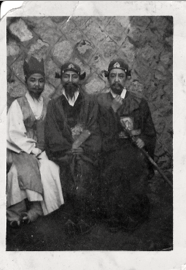
Honestly, I could write a whole novel about this woman, but I’m too scared she might read it and I’d be in big fat trouble. Instead, I’ll leave you with some photos of my mama, the Drama Queen from her early acting days.

There she is……….on the left!

In these next two photos, she’s the badass on the right.
Enhanced by Zemanta

Working It Out

I love the moments when my boys are like this:

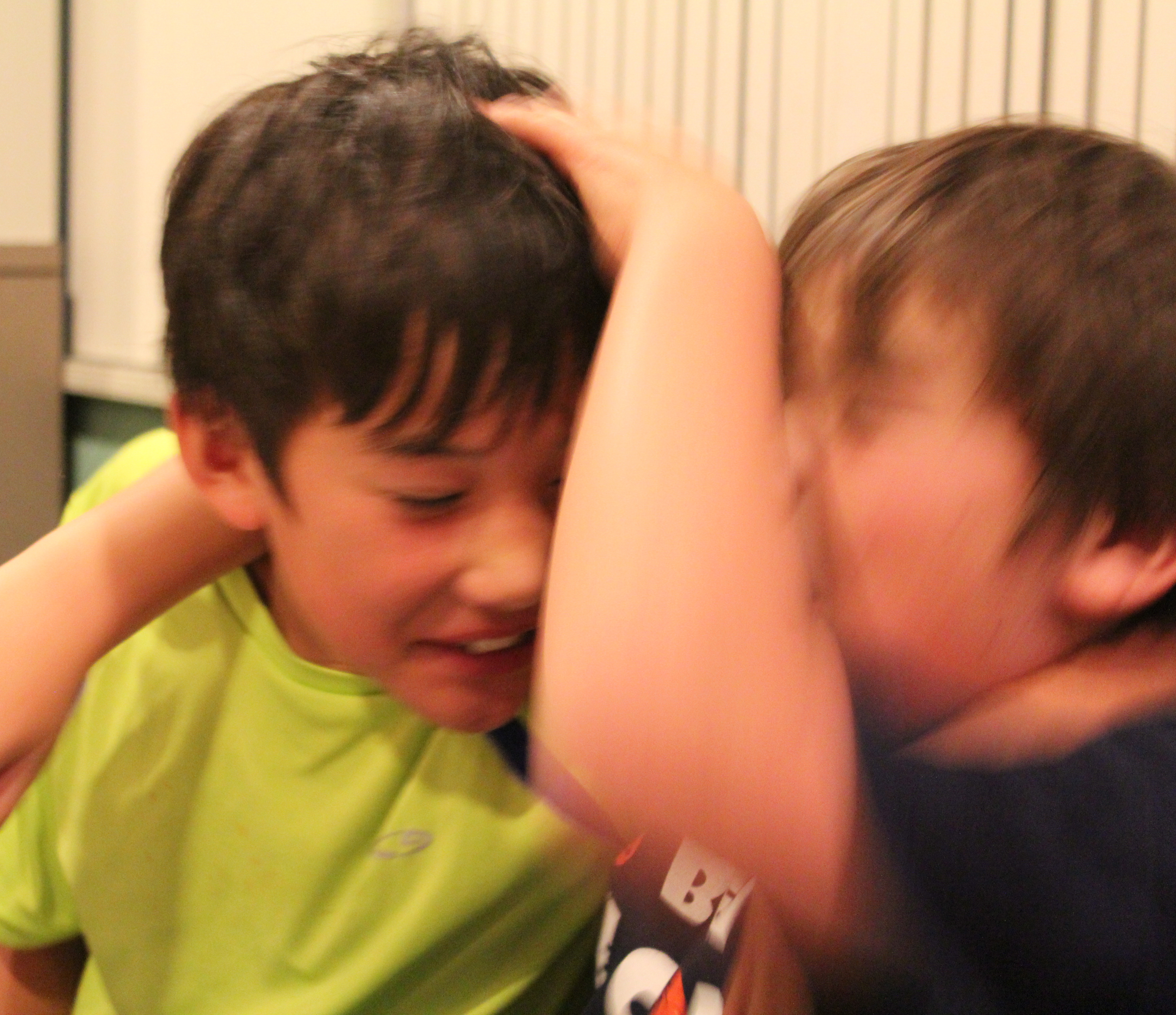
But let’s get real. There are plenty of days when they’re like this:

This afternoon they left in high spirits to play tennis at the courts in our neighborhood. I’m still not sure what happened at the tennis courts, but they returned home separately, both filled with fury and absolutely certain that the other had been grievouslyoutrageouslyunforgivably in the wrong. Venomous words and death stares were exchanged. Bitter tears were shed. They retreated to opposite ends of the house to marinate in their own bile.

I wondered if I should dispense a few bromides, make them hug it out, or exact insincere apologies from both aggrieved parties. Being the exceedingly lazy person that I am, I decided to do the easiest thing: nothing at all.

I was reminded of how my mother dealt with us when we quarreled as children…

One day my older sisters were bickering with each other. My mother frogmarched them into the kitchen, poured herself a cup of coffee, drew up a chair, and in a brisk, business-like tone instructed them to punch each other.

My sisters looked at her and then each other with intense embarrassment and discomfiture.

“Well?! You wanted to fight. So fight. Go on!” she said, drumming her fingers on the kitchen table.

They stood there looking miserable.

“Amie, you punch Annabelle,” she urged. Weeping now, my sister declined.

“You wanted to fight, so fight, I said! Go on! Punch Annabelle as hard as you can!”

Seeing that my mother would not be deterred, Amie weakly nudged Annabelle with a closed fist. Now my mother was really enjoying herself. She took another long swig of her coffee and said, “OK, Annabelle. Now you punch her back. Go on!”

When Annabelle, who was also sobbing by now, returned the nudge, they were both finally released from the horror show.

Years later my brother and I were squabbling about something or other when my mother remembered the diabolically clever penal scheme that had sprung like a miracle from her brain: the perfectly formed child of her fertile imagination. She couldn’t wait to relive the glory of the moment.

“You want to fight?! OK! Go on, fight! Adrienne, you punch Teddy.”

I can only imagine the satisfaction she felt as she watched the scene of her past triumph repeat itself.

“But I — don’t want — to hit him!” I blubbered and spluttered and managed to gasp out.

“I said, HIT him! You want to fight so badly, here’s your chance. I’m not stopping you! PUNCH him as HARD as you can!”

It was clear to me that we were mere puppets in this twisted demonstration of my mother’s disciplinary ingenuity and that the show would only end when we did as we were told. I delivered the first symbolic “punch,” a mere brush with my knuckles.

My mother pounced, practically spitting in glee, “Teddy! It’s your turn. Now you punch Adrienne!”

She didn’t need to tell him twice. He turned and punched me so hard I landed on my beleaguered ass clear across the room. That was the last time she ever tried that. But hey, it all worked out in the end…My brother and I love each other, and I even named my own son after him. The slurred speech and blurred vision eventually cleared up. And as for the memory loss? Who wants to harbor bitter, unpleasant memories anyway?

This afternoon I heard a lot of sniffling and muttering that went on for hours. Nicholas eventually started to do his homework in the dining room. Teddy took up his ukulele in the living room next door and started strumming it softly.

“Who’s playing the ukulele?” I heard from the dining room. I braced myself for the brouhaha that was sure to ensue and tried to head it off.

“Teddy,” I said, “Nicholas is trying to study. Why don’t you go up to your room and play?”

“No, I like it.” Nicholas said from the other room. “Teddy, you sound really good.”

And that was that. Peace in the valley once again.

A guest post from my son

As a thirteen-year veteran of living with a mother, you could say that I’ve become an expert. Here are my top ten tips for handling mothers.

1. Never ever act like you’re stressed, even if that’s how you feel. The mom will stress out and a stressed out mom equals the whole house being stressed out.

2. When your mother says that she has a “surprise,” unless it’s your birthday, that’s a red flag.

3. When your mother asks you to do something you don’t want to do, don’t be obviously disobedient, just look for every possible loophole.

4. When the word “adolescent” comes up, change the topic immediately. If you don’t, you’ll be in for an awkward “talk.”

5. Moms are good at lie-detecting. Practice the fine art of blaming things on your siblings before trying this at home.

6. When your mother tells you to take a shower, turn it on and then go hang out in your room. Don’t forget to turn the water off eventually, or she’ll get suspicious.

7. There’s always some secret your mother doesn’t want her parents to know. Use this knowledge wisely.

8. When your mom tells you to clean your room, don’t just shove everything into your closet. That’s an amateur move. Be more creative. Stashing things in your dresser drawer, your siblings’ bedrooms, or under blankets is less obvious.

9. Before dinner time ask your mother to help you with your homework so she won’t have time to make one of her famous “experiments.” You’ll have a better chance of getting chicken nuggets.

10.  If your mom complains about how badly your clothes smell after soccer practice, act both shocked and hurt that she would be so mean to you. There’s a good chance she’ll feel so bad that she might even buy you some ice cream.

Enhanced by Zemanta

This is my mother…

When we were in Arlington this weekend, I noticed my mother was having more trouble than usual getting into the car. Upon closer inspection I realized she had a bruise on her chin.

“What happened?” I asked.

“Oh, well…I fell the other day,” she said reluctantly.

“WHAT?!” I gasped in horror.

“I fell outside on the stairs that go to the basement and I couldn’t get up.”

The old “Help! I’ve fallen and I can’t get up” commercial immediately came to mind.

“Oh no! What did you do?” I asked.

“Well, since I couldn’t get up, I just stayed there on the ground for awhile.” My heart was breaking into a million splintery shards as I pictured my elderly mother face planting on the cold hard ground.

She started to grin and continued, “And then I noticed there were some weeds right where I’d fallen. So, since I couldn’t do anything else, I started pulling out the weeds. After a little while I could get up again.”

Yep. That’s my mother.

Mom gets her banged up leg bandaged.

My sister bandages my mom’s banged up leg.

Enhanced by Zemanta

Lessons from My Mama, Pt. 2

People above rules.

When I was a child I would occasionally ride the bus in D.C. with my mother. She would always try to sit as close to the driver as possible. As I nervously eyed the big sign that clearly told passengers not to talk to the driver while the bus was moving, my mother would launch her irresistible charm offensive. In no time at all, stone-faced, surly drivers would fall under her sway. They would be laughing and sharing personal anecdotes like a couple of long lost BFFs. By the end of every ride, I swear the drivers would be ready to give up a kidney for her.

Her disregard, and indeed disdain for rules that hinder human interaction was never so clear as when she came to visit me when my son Nicholas was a baby. He was going through a phase when he would torture me by never ever sleeping more than an hour at a time. I was thoroughly exhausted and was trying to rectify the situation by “Ferberizing” him. The “Ferber Method” is a technique developed by Dr. Richard Ferber to train an infant to learn how to self-soothe and put himself back to sleep. Basically, it involves a training period during which you let your baby cry for longer and longer periods of time. Ultimately, the method is supposed to result in a baby, who doesn’t cry and who sleeps soundly through the night. When my mother came to visit me and realized that I wasn’t leaping to rush to my baby’s side when he cried, she was outraged. She snorted when I tried to explain the rationale. Whenever Nicholas so much as peeped, she would pick him up and hand him to me and demand that I whip it out to nurse him. As I did her bidding, she would stand there watching me with her arms crossed, shaking her head and muttering under her breath in a seamless blend of Korean and the Universal Language of Disgust the whole time, “Ay-goh!…’Ferber’ joah ha neh!…Tchuh!”

My mother has always been guided only by her own rule: to love and care for people with extravagant generosity. She is as warm and effervescent to gas station attendants as she is to her own children and grandchildren. At the same time, the truth of the matter is that she is a formidable, if benevolent force of nature, who always gets her way. The miracle of it all is that she manages to completely subjugate people with a weirdly hypnotic and bewitching despotism, which  inspires only devotion and gratitude for her attentions.

Enhanced by Zemanta

Lessons from My Mama, Pt. 1

“Don’t buy junks!” or: Spend money on people, not things.

Frugality is an Olympic sport for my mother. She wouldn’t dream of buying waxed paper. Why would she, when she can use the perfectly good, free waxed bags that come in cereal boxes? She has an elaborate tiered system of usage for paper towels, which makes one roll last an entire year. They can be used multiple times (by the same person) as napkins. When they’re too dirty to serve this purpose, they graduate to the next stage, at which point they go into an old oatmeal container to be on hand for soaking up excess pan grease. When there’s so little toothpaste left that it becomes difficult to squeeze out, she cuts open the tube with a pair of scissors so that every last bit can be scraped out.

We’ve been chastised by a cousin for letting our mother dress in shabby clothes. She made the vest she’s wearing in the photo out of an old duvet cover and leftover material about a million years ago. It’s been washed so many times, it’s disintegrating. We’ve all begged her to throw it away, and you can bet we’ve plied her with new ones to replace it. She finally conceded that it was time to give it the heave-ho, but the last time I visited her, I blinked my eyes in disbelief when I saw her still wearing it.

“Wait a minute? Are those patches on your vest?” I asked incredulously.

She proudly showed off the new patches she’d sewn onto the most raggedy bits and said, “Now I can wear it until I die!”

IMG_1716

Every time she receives yet another new vest, or indeed any present we or anyone else ever buys for her, her eyes gleam as she imagines how happy it will make the next recipient she’s already planning to give it to.

When she was still living in Korea, my mother would visit me once a year in Virginia. The minute she recovered from jet lag, we’d make a pilgrimage to Sam’s Club,  where she’d spend a small fortune on medicines that would literally fill an entire suitcase.

“You can’t possibly go through all that before you come back for another visit!” I once exclaimed.

She looked at me like I was crazy and explained that she was taking them all back to give away to people, who couldn’t afford them. On that same occasion, I learned that she also regularly gave scholarships to students.

“Hey, Moneybags,” we’ll say affectionately, when we see her giving away money yet again, “Been shaking that money tree in your back yard again?” But the fact is: we all know that money has been extracted out of  toothpaste tubes, alchemized out of  used and reused paper towels, and saved by never spending a penny on herself…

Enhanced by Zemanta

My Mama, the Drama Queen

Originally posted in November…

My dad told us that he heard about my mother before ever setting eyes on her. According to him, Seoul was abuzz with excitement about her acting. This horrified and mortified my grandmother, who considered acting a déclassé pursuit not too far removed from prostitution.

Although my mother gave up stage acting after college, she has worn the tiara of an inveterate drama queen all her life. She is brash and sparkling: like a firecracker rather than a candle. It was a cosmic accident that my mother was born in Korea, and not in America. Korean women titter hesitantly with their heads bowed and a hand covering their mouth; my mother throws her head back and guffaws raucously. When she’s happy, she trills like a bird. When she’s angry, her eyes blaze, the moon eclipses the sun, and darkness falls heavily upon the cold earth.

Her exceptional acting skills have been called into service many times over the years. A Korean couple once called my parents in the middle of the night to ask them to accompany them to the emergency room so that they could help interpret for them. They waited in the emergency room for hours while the woman’s condition worsened. She was doubled over in agonizing pain, but was still made to wait. Suddenly, my mother stood up and started screeching at the top of her lungs like a madwoman, “This woman is DYING! She’s DYING and NO ONE IS TAKING CARE OF HER! SHE’S GOING TO DIE, RIGHT HERE IN THE WAITING ROOM!” Later my mother reported burning with shame and embarrassment as she created the scene, but she didn’t stop screaming until the orderlies rushed over and wheeled the woman away. When the doctors came back, they reported that the woman had had an ectopic pregnancy, and had indeed been minutes away from dying when my mother gave the spectacular performance that saved her life.

My mother continued to hone her craft over many years and in many venues. Bank performances became her specialty. In fact, torturing bank employees across America and getting them to do her bidding became something of a hobby for my mother. As she can’t drive, she would have me take her to the bank. My mother would sit silently, clutching her big shabby purse on her lap until called, whereupon she would blink her eyes like a dazed little bird and wander into the cubicle of her next victim. The affable bank employee would size up this little old lady, crack a few genial jokes, make a few pleasantries…And then my mother would begin.

“Now. I received this letter from you telling me that my CD matured. I would like to withdraw my money, please.”

“Ah, yes, Mrs. Kim, but it’s now July 15th, and the deadline for withdrawing was more than two months ago.”

“Yes. I understand. But I was in Korea, and I couldn’t come until today.”

No matter what the banker said, no matter how patiently he would point to the date long passed, my mother would just keep repeating her request over and over in the same mild-mannered way.

“I couldn’t come by May 1st, because I was in Korea. My flight arrived only a few days ago. I was sooo jetlagged, but finally I was able to come today. And I would like my money now.”

It would go on like this for a good ten minutes. “Pooooooor sap,” I’d think to myself as I would watch the banker squirm like  a pinned insect. Finally, he would succumb to the inevitable and hand my mother whatever she wanted on a silver platter. I imagine those bankers consoled themselves with the thought that they were doing a good deed for this dear, confused little kitten. If they had paid attention, though, they would have witnessed a remarkable metamorphosis as she strode out the door counting her bills like a Korean Keyser Söze.

Her own family was treated to the theatrics as well. When she thought we were watching too much T.V., for example, she heaved the  set into the driveway, pulled the plug out from both ends, and chopped the cord into a million pieces. When I was struggling to finish my Ph.D. with a toddler and an infant to care for and was ready to give up on the whole project, my mother called me one day and pleaded in a voice overwrought with emotion, “Just finish it for your father’s sake. It would mean so much to him. Please. Do this one last thing for him, before he dies.” Never mind that he was in perfect health, the dissertation got written that year.

About four years ago, we almost lost my mother. She was diagnosed with primary amyloidosis and given eighteen months to live. She came back to America to be treated at Sloan-Kettering through a clinical trial of a chemotherapy drug. When it was clear that the treatment would kill her faster than the disease, she was kicked out of the trial, but she had had just enough chemo to knock her disease into remission. Fiercely independent, though still weak as a newborn lamb, she insisted on dragging herself back to Korea on a 20 hour flight, against doctors’ orders and despite the entreaties of her family. My dad shudders when he recalls her lying on the airport floor from sheer exhaustion during a layover. She broke three ribs the day after arriving when she tripped over the suitcases she was too tired for the first time in her life to unpack the minute she arrived, but she had triumphed. Giving Death the finger, she had staggered back to her own apartment, and her own life. We went to visit my parents that summer and met my father’s assistant minister. This grown man in his thirties, married with two children, confessed to my brother in his heavily accented English, “I am scared of your mommy. But I love her.”

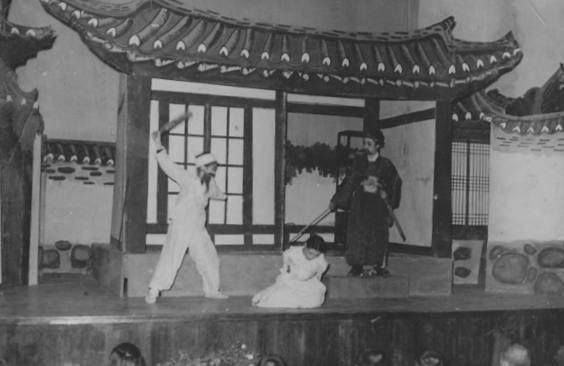
Honestly, I could write a whole novel about this woman, but I’m too scared she might read it and I’d be in big fat trouble. Instead, I’ll leave you with some photos of my mama, the Drama Queen from her early acting days.

There she is……….on the left!

In these next two photos, she’s the badass on the right.

Enhanced by Zemanta

63 Bowls of Seaweed Soup, or: The First 21 Days

In Korea the 21st day of a baby’s life (Saei-rye), the 100th day of life (Baek-il), the 1st birthday (Dol, or Doljanchi) and the 60th birthday (Hwangap) are considered important milestones. Long ago, when infant mortality rates were higher and average life expectancy much lower than they are now, reaching these milestones was truly something to celebrate. Today, though life expectancy has greatly improved, these milestones are still marked with age-old traditions and celebrations.

A Korean mother and her baby are basically in solitary confinement (samchil-il) for the first 21 days of the baby’s life. They are not supposed to leave the house, and no one (except maybe the mother’s mother) is allowed to visit. Traditionally, a straw rope would be hung across the gate in front of the house to announce a baby’s birth and gender, to warn people away, and to ward off evil spirits. If the baby was a boy, anatomically suggestive red chili peppers or tassels in the shape of peppers would be entwined in the rope:

Does this remind you of anything?

Remind you of anything?

Pine twigs, representing longevity and virtue, would announce the birth of a baby girl. Bits of charcoal, representing purity, would be interspersed with the chili peppers and the pine twigs to chase away evil spirits.

When each of our nieces and nephews was born, my siblings and I were dying to go visit the baby right away, but were strictly forbidden to do so by my mother until the baby was 21 days old. When she found out that I had gone to a book fair with one of my own babies only days after giving birth, she was positively apoplectic. During the period of samchil-il, both the new mother and her baby are supposed to stay at home bundled in warm clothing to rest and recover from the ordeal of childbirth.

My son’s birth was indeed an ordeal. After 20 hours of labor, he was born with an alarmingly pointy head, jaundice, and a fever. I had a broken tailbone that left me unable to sit for 10 weeks and was a physical and emotional wreck. When we were discharged from the hospital, I was panic-stricken. Couldn’t the doctors and nurses see that I had no idea what I was doing? I was astonished at how irresponsible they were being to entrust this poor, helpless babe to someone as obviously unfit for motherhood as I was.

Those first weeks were a time of constant anxiety. I was given strict orders to nurse my baby every two hours to clear up his jaundice, but because of the jaundice, he was extremely sleepy and lethargic. I was instructed to do whatever I had to do in order to wake him up to nurse. A visiting nurse suggested that I wake him up by putting a cold wet washcloth on his face, but even that didn’t work. Trying to keep him awake, nurse him, and keep him wrapped in the biliblanket that was also supposed to help clear up the jaundice felt like a Sisyphean task.

Fortunately for me, my mother didn’t wait 21 days to come visit. When she arrived, the clouds finally parted. It was Easter. The sun was shining and the flowers were blooming. I look at photos of this day and I can see the relief and joy on my face:

My mother came with a bag full of exotic ingredients with which she cooked a gigantic cauldron of seaweed soup (miyuk gook) for me. This is the traditional postpartum food that a mother is supposed to eat for the first  21 days after giving birth. Why seaweed soup? The new mother is not supposed to eat or drink anything cold. She is also not supposed to eat anything that is hard to chew, as the gums have been weakened. More importantly, the iron, calcium, and iodine in seaweed are supposed to aid in the recovery after childbirth and milk production. Koreans traditionally eat this soup every year on their birthday, because it is so closely associated with birth. My mother urged me to eat this soup for breakfast, lunch, and dinner. I love Korean food, and my mother’s culinary skills are legendary, but there is no alchemy that can transform thick, rubbery bits of seaweed floating in broth into a palatable dish, especially when one is required to eat it three times a day. Every day she was there, my mother would heat up the soup and then sit across the table from me as I choked it down under her watchful gaze. The day she left, my mom made me promise to keep eating the soup until it was all gone.

I’ll never forget the utter despair I felt as my mom and dad drove away from our house to return to their own. I stood in the driveway clutching my baby and wailing disconsolately as I watched the car until it disappeared around the corner. I truly didn’t know how I could possibly manage without my mother there to help and guide me. I went back inside and ladled out a bowl of her seaweed soup with tears streaming down my face. My mother was no longer there, but I could taste her love in every slimy spoonful. I ate every last drop.

Enhanced by Zemanta

“For love is strong as death”

Screen Shot 2013-01-09 at 7.05.50 PMI met my friend’s mother for the first time when I stayed at her house many, many years ago. I think we may have both still been in college at the time. I remember her mother as a quiet, petite woman with blonde hair swept back into an elegant, old-fashioned bun. She had a gentle, golden presence.

My friend’s mother, like mine, was an émigré and spoke in softly accented English. She, like my own mother, was a gifted gardener. Her garden, like my mother’s, was an exquisite masterpiece wrought of love and an instinctual eye for beauty. If my memory serves me correctly, her mother, like my own, loved peonies best of all. When my friend and I recently reconnected, we made the sad discovery that both of our mothers were suffering from the same, fairly rare disease.

Last week she wrote to tell me that her mother had just lost her battle with the disease. I never have the right words for moments like these, so I am borrowing Edna St. Vincent Millay’s instead:

Dirge Without Music

This is for you and your mom, my dear friend. In my mind, she is in a beautiful garden. She is in a skirt and a blouse with a cardigan draped over her shoulders. She is bending to smell the lovely fragrance of a peony.

Sending you oceans of love.

“Set me as a seal upon thine heart, as a seal upon thine arm: for love is strong as death.” -Song of Solomon

Enhanced by Zemanta